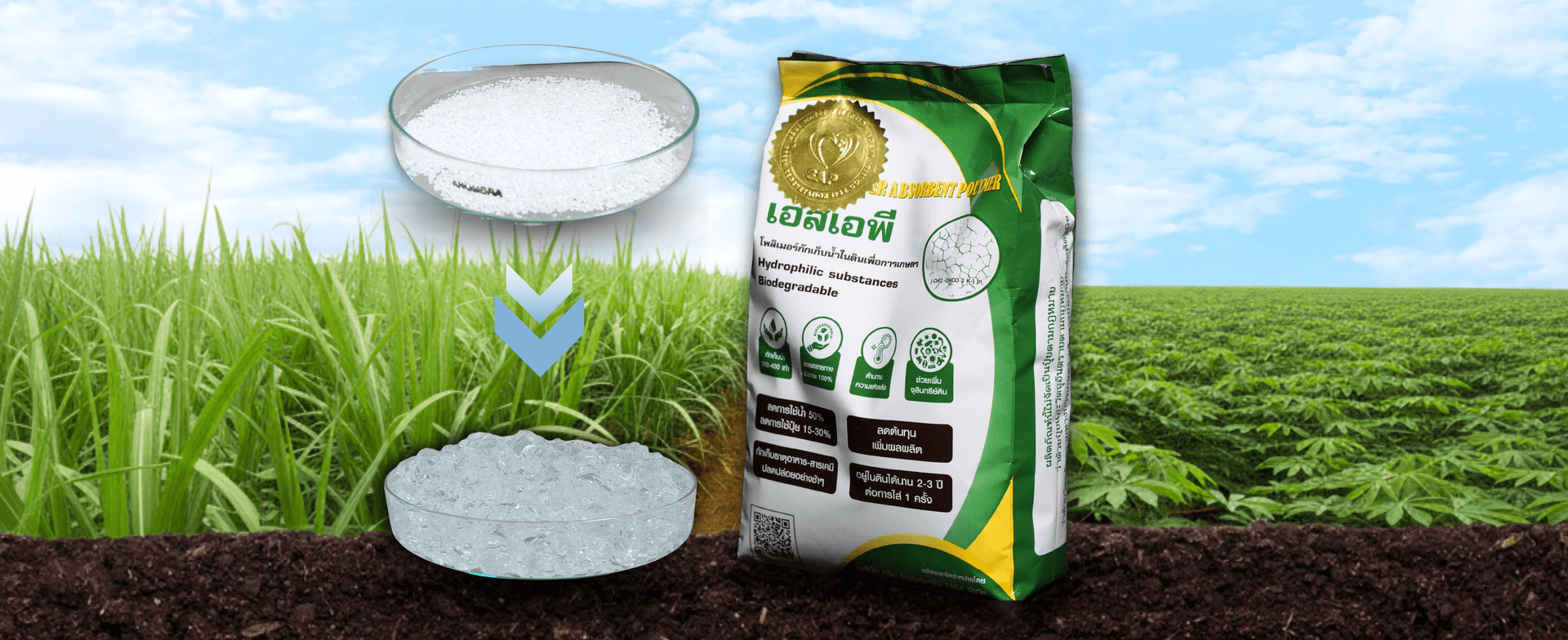
ไฮโดรเจลสารอุ้มน้ำดูดน้ำได้ 300–400 เท่าของน้ำหนักตัวเอง เก็บไว้ในดินและค่อย ๆ ปล่อยเมื่อดินแห้ง ช่วยรักษาผลผลิตช่วงฝนทิ้งช่วง
SUPER ABSORBENT POLYMER · KANCHANABURI
+16.5%
ผลผลิตเพิ่ม · แปลงทดสอบนาข้าว
300–400 เท่า
อุ้มน้ำ
ต่อน้ำหนักแห้ง
−30%
ใช้น้ำลดลง
นาข้าวดินทราย
−40%
ความถี่การสูบน้ำ
นาข้าวดินทราย
+16.5%
ผลผลิตเพิ่ม
แปลงทดสอบนาข้าว
2–3 ปี
หนึ่งครั้งอยู่ในดิน
ที่อุณหภูมิดิน 25–38°C
01
ดูดซับ
เม็ดเอสเอพีดูดน้ำฝน น้ำชลประทาน หรือน้ำบาดาลทันทีที่สัมผัส พองตัว 300–400 เท่าเป็นไฮโดรเจล
02
กักเก็บ
เก็บน้ำและไอออนปุ๋ยทั้งบวกและลบไว้ในเขตรากพืช แทนที่จะถูกชะล้างลงไปใต้ราก
03
ปลดปล่อย
เมื่อดินแห้ง รากพืชดึงน้ำและธาตุอาหารกลับมาใช้แบบช้า ๆ ก่อนพืชถึงจุดเหี่ยว
01
ไร่อ้อย-มันสำปะหลังนอกเขตชลประทาน
ภาคอีสาน · ดินทราย อาศัยน้ำฝน
02
นาข้าวภาคกลางและเหนือ
ทั้งดินเหนียวและดินทราย · ทดสอบในแปลงจริง
03
สวนผลไม้ภาคตะวันออก
ทุเรียน มังคุด ลำไย ที่ใช้น้ำบาดาลกร่อย
04
งานย้ายปลูก สนามหญ้า และสวนในเมือง
เพาะกล้า ปลูกป่า · ภูมิทัศน์เขตแห้งแล้ง
สอดคล้องกับงานวิจัยข้าวที่ใช้ไฮโดรเจลซึ่งตีพิมพ์โดย IIRR
ประมาณ 2–3 ปี ที่อุณหภูมิดินปกติ (25–38°C) แล้วย่อยสลายเป็น CO₂ NH₃ และ H₂O ไม่มีสารตกค้าง
แปลงทดสอบนาข้าวดินทรายลดการใช้น้ำราว 30% และลดความถี่การสูบน้ำราว 40%
ไม่ใช่ ตามกฎหมายไทยไม่จัดเป็นปุ๋ย สารกำจัดศัตรูพืช หรือวัตถุอันตราย
ได้ ส่ง ex-works จากกาญจนบุรี ชำระเป็น USD และให้สิทธิ์จำหน่ายระดับประเทศแก่ตัวแทนที่ผ่านการคัดเลือก
แจ้งชนิดพืชและขนาดพื้นที่ ทีมงานส่งเอกสารที่ตรงให้
ติดต่อเรา