Thai rice growers can cut water use by 30% and lift yield by 16.5% with a mix of soil prep, hydrogel use, and disciplined irrigation. Here is the step-by-step playbook.
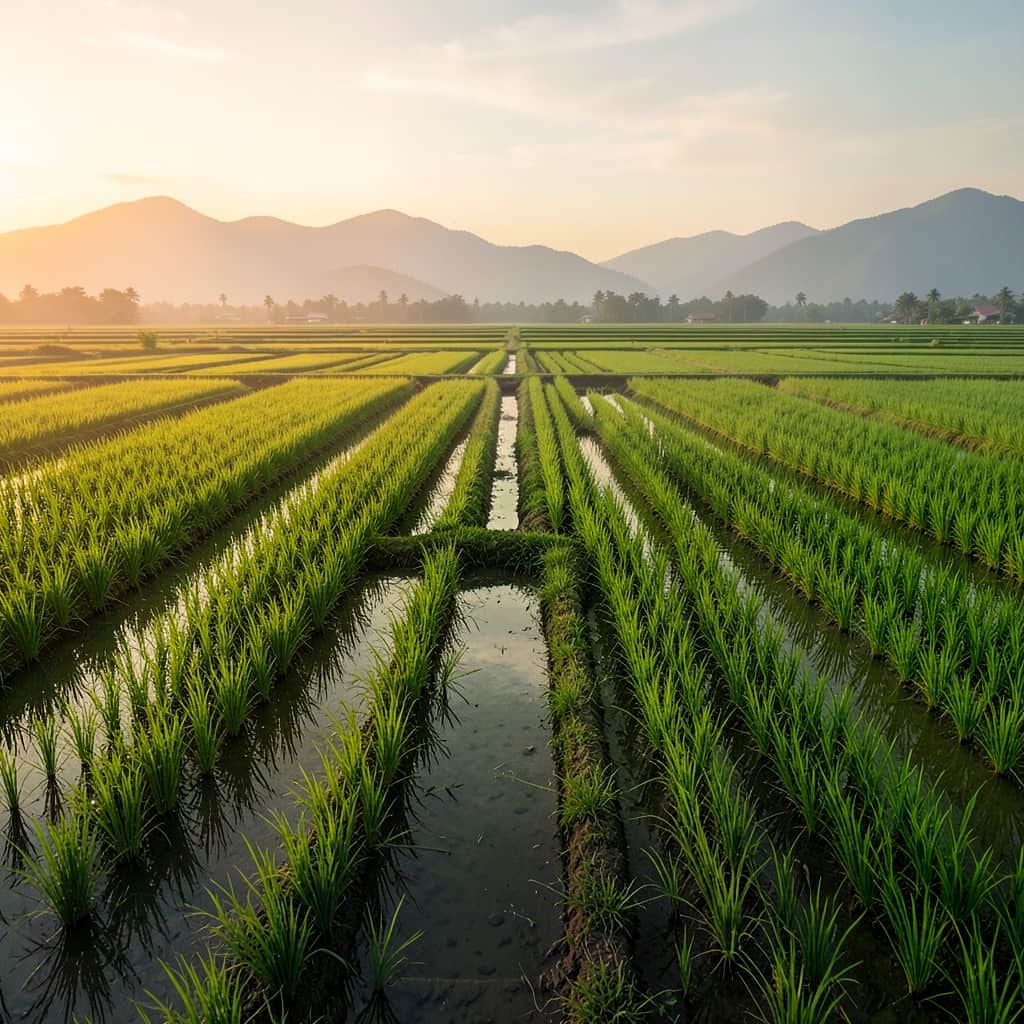
Traditional flooded paddy farming evaporates and drains far more water than the plant actually drinks. Studies in Southeast Asia consistently show that only 30–40% of the water you pump into a paddy actually goes into producing rice. The rest is lost three ways:
In a wet year this barely matters. In a dry year, every extra cycle of pumping cuts your margin.
Before you plant, the shape of the bed determines how water moves:
This is where SAP hydrogel makes the biggest practical difference. A small amount worked into the topsoil before planting acts as a slow-release water reservoir for the roots.
Recommended starting dose for rice:
The hydrogel swells with the first irrigation, then releases moisture gradually between waterings. This is what lets you stretch each pump cycle further.
Important: SAP is not surface-applied (except in flooded paddy rice). For all other crops, mix it into the soil — surface-spread SAP dries out and never reaches the root zone.
Continuous flooding wastes the most water. Alternate wet-dry — where the field is allowed to dry until soil moisture reaches a target before re-flooding — saves 25–30% of pump water in our trials.
Practical AWD cadence for the wet-to-dry transition phase:
With SAP in the root zone, the dry phase is more forgiving — the plants do not stress as quickly because moisture is held in the gel reservoir.
You cannot manage what you do not measure. Track three numbers across the season:
Compare two adjacent paddies (one with the new playbook, one with your normal practice) for one full season. The numbers will tell you whether to scale the changes or roll them back.
When we apply the bundle (laser levelling, SAP hydrogel, AWD) in rice paddies, we see:
| Metric | Change |
|---|---|
| Water input | -30% |
| Pump cycles | -40% |
| Yield per rai (≈ 0.16 ha) | +16.5% |
SAP also absorbs nutrient ions from fertilizer and releases them gradually back to the roots, which reduces leaching loss. We do not publish a percentage on fertilizer savings — that figure varies by soil and program.
Data from the India Institute of Rice Research (IIRR), comparing irrigation duration under control vs. under hydrogel:
| Control (days) | With hydrogel (days) | Days extended |
|---|---|---|
| 22–24 | 29 | +5 |
| 40–45 | 54 | +9 |
| 70–75 | 90 | +15 |
| 90–95 | 114 | +19 |
Source: IIRR India Institute of Rice Research, cited in the company technical brief.
The later in the crop cycle, the larger the cushion SAP provides between irrigations.
This playbook reduces water waste — it does not replace water that never falls. In a year of severe drought, you will still need supplemental irrigation. SAP buys you time and stretches every drop, but it cannot manufacture moisture.
If your field is fully rain-fed with no irrigation backup at all, focus first on land levelling and SAP — and budget for a small storage pond if you can.
If you are running a paddy farm and want a soil-specific recommendation for SAP dose and AWD schedule, send us your soil and crop details. Our team will recommend a plan tuned to your land within one business day.
Published by Green Regeneration 1954 Co., Ltd.
Tell us about your soil and crop — we'll formulate the right SAP mix for your land.
Talk to an expert