Super Absorbent Polymer (SAP) hydrogel holds 400–1,000× its weight in water and releases it slowly to plant roots. Here is what every grower should know — in plain language.
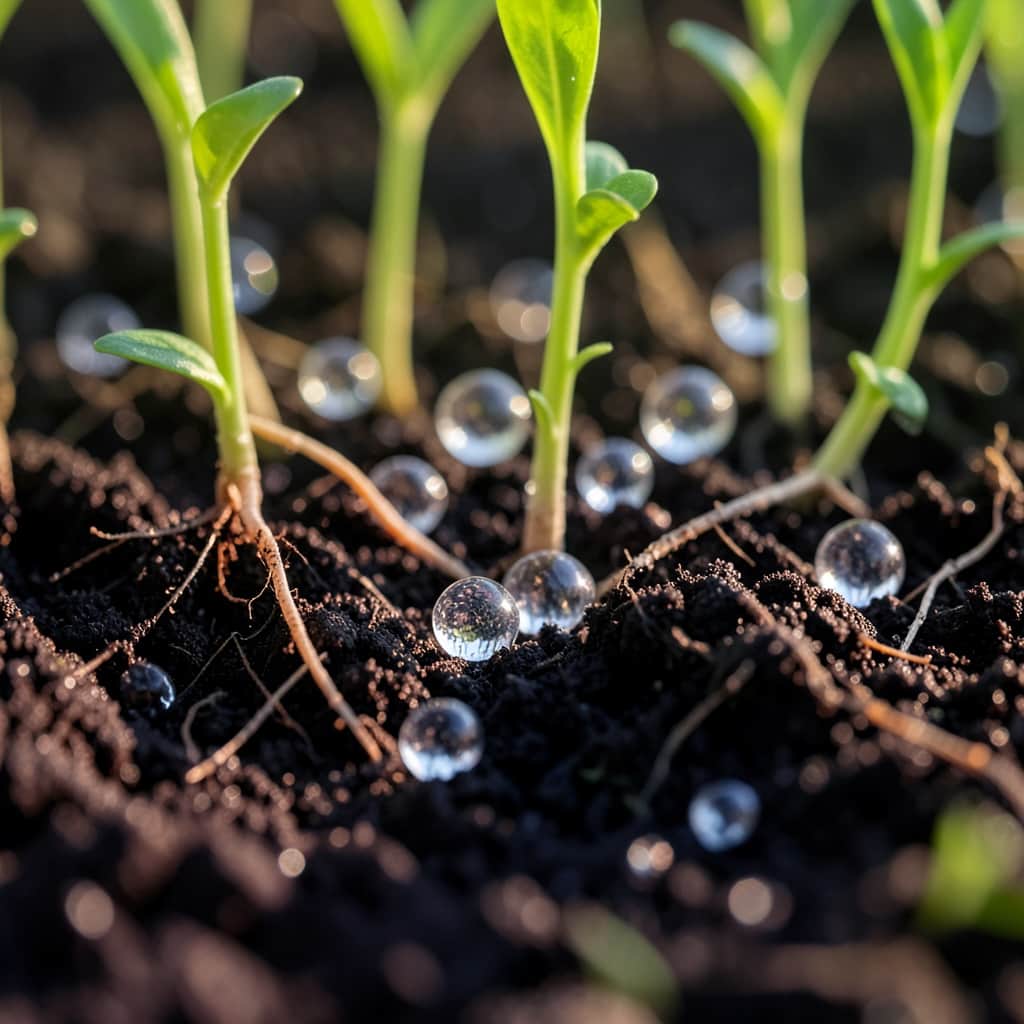
SAP stands for Super Absorbent Polymer. It is a crosslinked polymer that can swell with water far beyond its dry weight. When you stir SAP granules into water, each granule grows into a soft, transparent gel that holds 400–1,000 times its own weight.
That property is what makes SAP useful in farming. A small amount mixed into the planting bed creates micro-reservoirs of moisture that the plant can draw from over days or weeks.
The cycle has four steps:
The result, in our rice paddy field tests: about 30% less water used, 40% fewer pump cycles, and a 16.5% yield lift on average. Results vary by soil type and climate.
This is the most common question we hear. They are not the same product.
| Industrial SAP (e.g. diapers) | Agricultural SAP | |
|---|---|---|
| Designed for | Personal-care absorption | Plant-friendly moisture buffer |
| Effect on soil | Accumulates salt, harmful to plants | Biodegradable, plant-compatible |
| Lifespan | Single use | 2–3 years gradual breakdown |
| Cost per kg | Lower | Slightly higher — but very small dose |
If you ever see "SAP" sold cheaply in bulk, check what kind. Diaper-grade SAP in soil is worse than no SAP at all — it slowly poisons the bed with salt.
SAP shines wherever water supply is unreliable:
It is less useful in heavy clay soils that already hold water well, unless paired with a soil conditioner that prevents waterlogging.
SAP is not a fertilizer. It does not create water — it stores what already enters the soil. If your field receives zero rain or irrigation for months, SAP cannot save it. What it can do is stretch every irrigation cycle longer, so you spend less on pumping and lose fewer crops to dry spells.
A good SAP is a soil moisture buffer. It is one of the cheapest tools available for managing drought risk, especially for rain-fed farms. The technology has been studied for decades and is widely used in commercial agriculture — but the quality and formulation matter more than the marketing.
If you are evaluating SAP for your farm, ask for proof: field trials, biodegradability data, and a recommendation matched to your specific soil and crop.
Published by Green Regeneration 1954 Co., Ltd.
Tell us about your soil and crop — we'll formulate the right SAP mix for your land.
Talk to an expert